Choosing the Right Steel Tube: A Comprehensive Buyer’s Guide
In today’s fast-moving construction and industrial landscape, steel tubes play a critical role in shaping strong, reliable, and long-lasting structures. Whether it is high-rise buildings, industrial plants or infrastructure projects, selecting the appropriate steel tube is not only a technical decision but also a business-critical one. Making the right choice enhances safety, cuts down maintenance expenses while offering years-long services.
This isn’t just any run-of-the-mill buying guide; this ultimate buyer guide will help engineers, contractors, procurement managers, and project owners to know how one should go about selecting the steel tube that meets their needs. A guide that is written in a simple human practical way will give not only the theoretical knowledge but also has relief of market realities (especially in Saudi Arabia steel tubes market where every year the quality standards and large-scale infrastructure demands are rising)
Understanding Steel Tubes and Why They Matter?
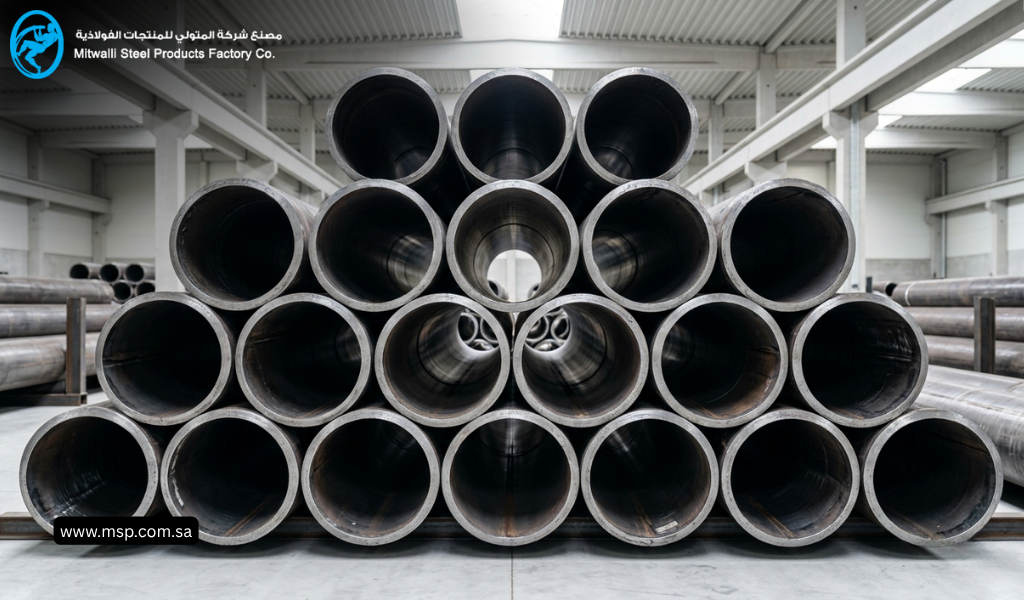
Steel Tubes are hollow cylindrical and rectangular products that come for use across construction, manufacturing, and infra jobs. They use hollow construction, which aids in keeping mass and material usage to a minimum while still providing outstanding strength. Such a balance of safety, durability, and cost-effective solutions is the reason that the steel tube has become the most ideal choice in contemporary engineering.
On the other hand, most of hollow steel tube have better load-bearing capacity as compared to solid steel bars per kilogram of weight. As a result, they are well suited for use in high performance and high efficiency applications such as structural frames, piping, scaffolding, and mechanical components.
Types of Steel Tubes and Their Applications
Types of Steel Tubes Explained
You need to know what types of steel tubes are on the market before you can make a good purchase decision.
Seamless Steel Tubes
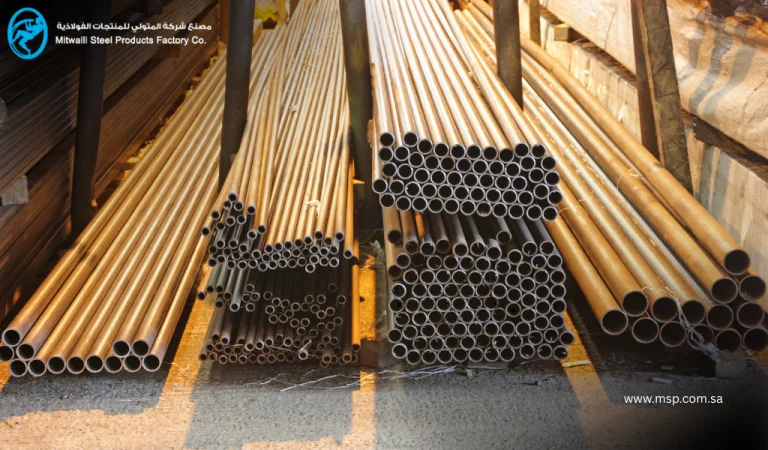
Seamless tubes are produced without welded joints, which gives them homogeneous strength, and they are widely used in high-pressure and high-temperature applications.
Welded Steel Tubes
Economical, These Tubes are widely used in construction and general engineering and are made by welding the steel sheets/strip.
Hollow Steel Tubes
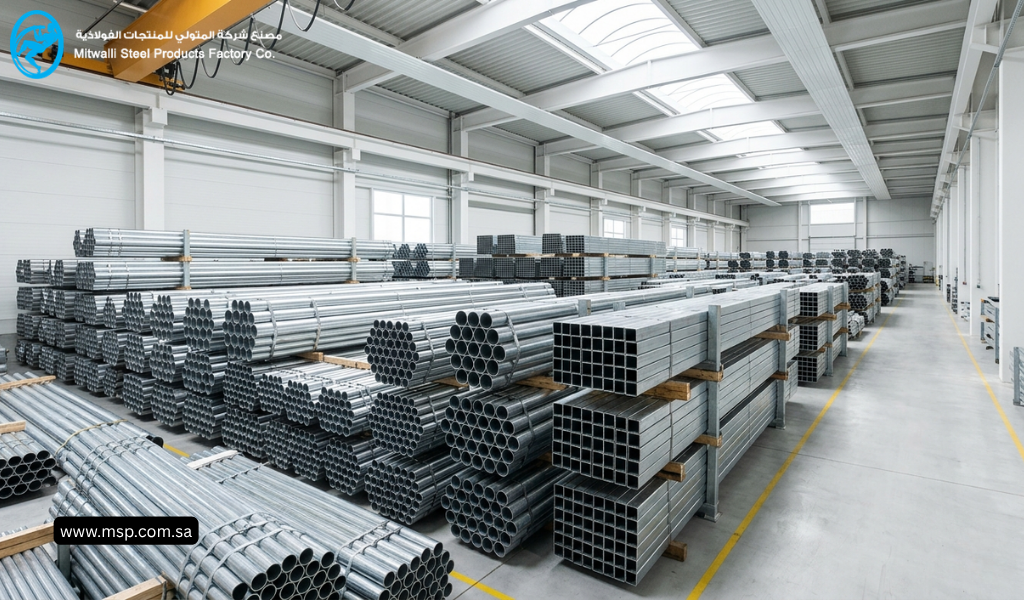
Hollow steel tubes come in round, square, and rectangular shapes and are commonly used in the framework of buildings, supports, and columns.
Precision Steel Tubes
For use in applications where high dimensional precision is demanded, including automotive and machine systems.
Choosing the right type depends on load demands, the environment of use, and design of the project, and each has its designated role.
Infrastructure and Structural Applications
Infrastructures Structural Steel Tubes
Infrastructure structural steel tubes are essential to support Large Scale Infrastructure Projects. These tubes are used for:
- Bridges and flyovers
- Industrial warehouses and factories
- Airports, stadiums, and commercial complexes
- Power plants and energy facilities
Steel tubes provide essential tensile support in structural applications due to their endurance against heavy loads, seismic forces, and harsh environmental conditions. For regions such as Saudi Arabia where infrastructure Constructing is moving up now, high quality structural steel tube demand still constantly emerges.

The Saudi Arabia Steel Tubes Market: Key Insights
The Saudi Arabia steel tubes market has been driven strong growth on account of high government infrastructure investments, industrial expansion, and Vision 2030 initiatives. Steel tube solutions are essential to mega projects, urban development, oil and gas facilities, and logistics hubs.
Buyers in this market prioritize:
- Compliance with international and local standards
- Consistent quality and dimensional accuracy
- Reliable supply chains and timely delivery
Knowledge of local market requirements assist buyers in choosing steel tubes which conform to both regulatory and project specific requirements.
How to Choose the Right Steel Tubes for Your Project?
Key Factors Buyers Should Consider
Narrow Down Most Important Aspects : Steel Tubes Selection
1. Load-Bearing Requirements
Steel tubes thickness, as well as diameter and grades must meet structural and mechanical loads.
2. Application Environment
Corrosion resistance and surface treatments are important for outdoor or corrosive environment.
3. Shape and Size
Select hollow steel tubes in round, square or rectangular shapes according to design and load distribution;
4. Compliance and Certification
This is to ensure that steel tubes conform to recognized standards for quality and safety.
5. Long-Term Cost Efficiency
Using high-quality steel tubes provide long-term benefits by ultimately requiring less maintenance, fewer repairs, and fewer replacements.
Importance of Reliable Steel Tubes Suppliers
Choosing the Right Steel Tubes Suppliers
Equally important as choosing the most suitable product, is working with trusted Steel Tube Suppliers. Reliable suppliers ensure:
- Consistent material quality
- Accurate specifications and tolerances
- On-time delivery for project schedules
- Technical support and documentation
Skilled suppliers are aware of the needs in the sector and aid buyers in choosing the appropriate steel tubes for their uses, therefore lowering risks and delays.
Also read: The Versatility of Steel Tubes: Applications and Benefits Across Industries
Benefits of Using High-Quality Hollow Steel Tubes
Hollow steel tubes provide a host of benefits for both constructionSites and Industrial projects:
- High strength-to-weight ratio
- Reduced material consumption
- Design flexibility for architects and engineers
- Improved structural performance
- Long service life with minimal maintenance
For this reason, hollow steel tubes are favorable for modern economical construction.
Sustainability and Long-Term Value
Steel tubes has participation in sustainable methods of construction. Steel is entirely recyclable, and designs utilizing hollow steel tubes minimize material used. Moreover, choosing quality and durable steel tubes is a great way to provide sustainability but also installment value to companies.
Common Buying Mistakes to Avoid
- Choosing steel tubes based only on price
- Ignoring application-specific requirements
- Overlooking supplier credibility
- Failing to verify standards and certifications
By not making these mistakes you will be sure that performance is better and your project has less risk.
Final Thoughts
Choosing the right steel tubes is a strategic decision that directly impacts safety, performance, and project success. By understanding the different types of steel tubes, evaluating application needs, and partnering with reliable steel tubes suppliers, buyers can make informed and confident decisions.
In fast-growing markets like the Saudi Arabia steel tubes market, investing in quality steel tubes ensures long-term durability, compliance, and value. Whether for infrastructure, industrial, or commercial projects, the right steel tubes create strong foundations for the future.
FAQs on Steel Tube
1. What are steel tubes commonly used for?
Steel tubes are used in construction, infrastructure, industrial equipment, pipelines, and structural frameworks due to their strength and versatility.
2. How do hollow steel tubes differ from solid steel bars?
Hollow steel tubes provide similar or better strength with less weight, making them more efficient and cost-effective.
3. Why are infrastructures structural steel tubes important?
They provide stability, load-bearing strength, and durability for large-scale infrastructure projects.
4. What should I look for in steel tubes suppliers?
Choose suppliers with proven quality standards, consistent supply, technical expertise, and reliable delivery.
5. Is the Saudi Arabia steel tubes market growing?
Yes, driven by infrastructure development, industrial expansion, and major national projects.